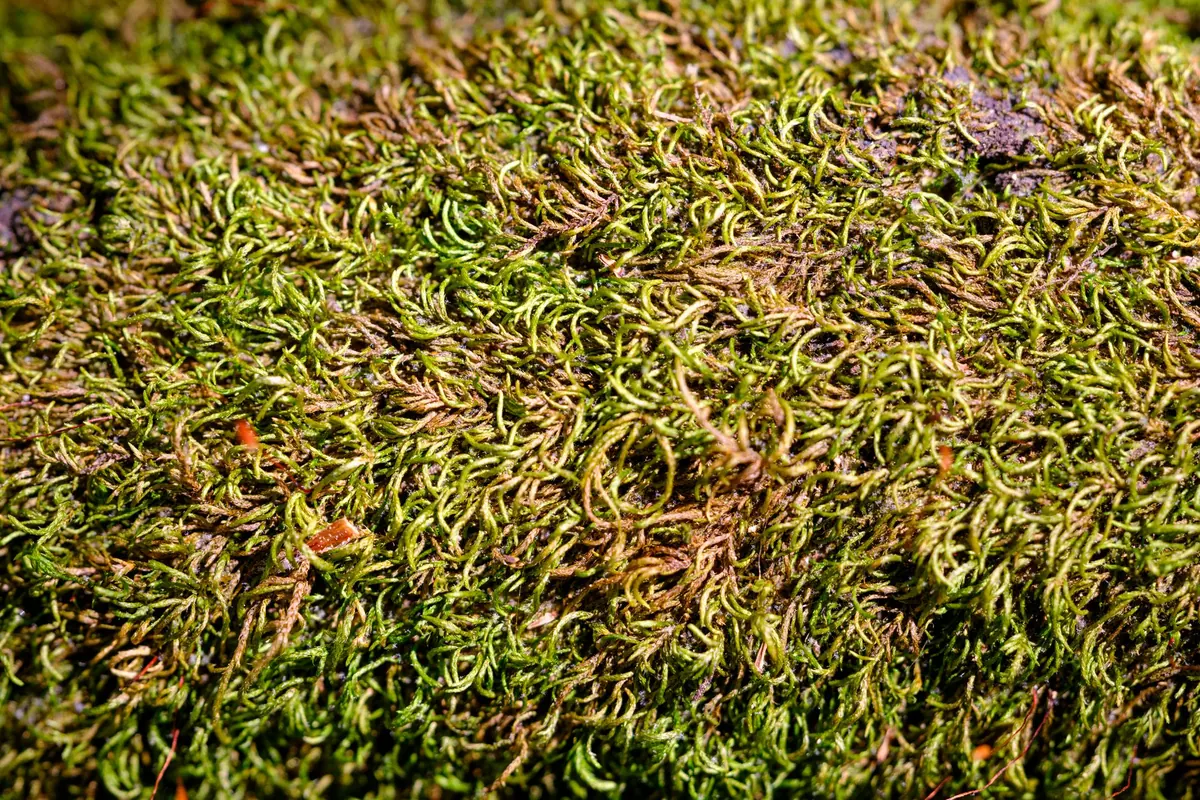
A courtyard lawn has a hard life. Tucked between walls, shaded for half the day, walked on by everyone who comes through the gate — it thins out, turns patchy, and grows moss anyway. That last part is the clue. Rather than fighting the shade with seed, feed and a sprinkler, you can work with it. Moss suits small enclosed spaces beautifully. It needs no mowing, no feeding and no stripey lines. What it does need is proper preparation and a little patience, because a moss lawn established badly looks like a damp mistake for two years.
Is moss the right choice for your courtyard?
Moss is not grass. It has no true roots, takes its water and nutrients straight through its leaves, and it bruises under constant footfall. In a small courtyard that is usually fine. Most people only need one route across the space — to the bin store, the shed, the back gate — and a few stepping stones will carry that traffic while the moss fills everything between them.
If every square foot of your courtyard is a walkway, keep a proper path and use moss as the surround. Also bear in mind that moss on paving is genuinely slippery when wet; keep it on soil beds and keep hard surfaces brushed clean.
What you get in return is a surface that stays green right through winter, softens the sound of the space, and recovers from dry spells without fuss. It will brown off in a hot, dry fortnight and green up again after rain. That is normal, not failure.
Reading the site before you start
Before you clear anything, watch the courtyard through a wet week. Note where water sits after rain, where the ground stays dark and cool, and where moss is already growing of its own accord. Those patches tell you more than any soil test you could buy.
Most mosses prefer shade or dappled light with consistent moisture. A south-facing courtyard that bakes from noon until evening will need watering through summer to keep a carpet looking well. Deep shade against a north wall, or the strip behind a fence that never quite dries out, is close to ideal.
What lies underneath matters just as much. Moss wants a firm, lean, slightly acidic surface. Rich, freshly manured soil encourages grass, weeds and worm casts, which push up through the moss and spoil the effect. Heavy clay that holds moisture is workable. Thin sand that dries out by mid-afternoon is hard going. And if your courtyard floods after heavy rain, sort the drainage before planting, because waterlogged moss rots rather than thrives.
Preparing the ground properly
This is the stage people rush, and it decides whether you end up with a carpet or a patchwork.
- Clear the old lawn. Lift the turf with a spade, or smother it with cardboard weighted down with mulch or black polythene and leave it for a season. The second method is slower but far less work.
- Remove persistent weeds. Dig out the roots of dandelion, creeping buttercup, bindweed and ground elder. Avoid residual weedkillers, which linger in the soil.
- Relieve compaction. Break up the top 5cm with a garden fork. There is no need to dig deeply.
- Firm and level. Tread the surface, then rake it to a fine, even tilth with a slight fall away from the house.
- Let it settle. Water it and wait a fortnight. Hoe off anything that germinates before you plant.
A lean, firm, slightly acidic surface is what moss wants. Fertility is the enemy — it invites grass and weeds to outcompete it.
So skip the compost and the lawn fertiliser. On very sandy ground, work in a thin layer of sieved leafmould to help it hold moisture. On heavy clay, it is worth forking in some grit to improve drainage before you firm it back down. Do not add lime.
Choosing mosses for a small courtyard
Buying from a specialist moss supplier is the reliable route, and it means you know what you are getting. Collecting from the wild is best avoided — it damages the place it grew and often fails to transplant. If a friend has a healthy patch, ask before taking a few clumps.
- Springy turf moss (Rhytidiadelphus squarrosus) — the best all-rounder for a lawn. Upright, slightly bristly, and it tolerates light foot traffic better than most.
- Neat feather moss (Pseudoscleropodium purum) — soft, pale green and dense. Excellent in shade, and it knits together into a convincing carpet.
- Cypress-leaved plait moss (Hypnum cupressiforme) — fine and feathery, happy on hummocks, edges and low steps.
- Common feather moss (Kindbergia praelonga) — spreads quickly in damp shade and fills gaps while slower species establish.
- Common tamarisk moss (Thuidium tamariscinum) — fern-like and lovely in cool, damp corners.
- Silver-moss (Bryum argenteum) — silvery and tough, ideal for gravel edges and crevices rather than a walkable carpet.
- Bog mosses (Sphagnum species) — only for genuinely wet, acidic spots, and not for walking on.
Planting and establishment
There are three approaches, and mixing them gives the best result.
- Fragments or plugs. Press small clumps into the prepared surface at roughly 10–15cm intervals and firm them gently. Keep them damp. This is the most reliable method.
- Slurry. Blend a couple of handfuls of moss with water to a milky consistency, then paint or pour it over the surface. Some gardeners add buttermilk, though plain rainwater works and attracts fewer pests. Results are slow and patchy, but it covers ground cheaply.
- Encouragement. Leave a bare, damp, undisturbed surface and let spores and blown fragments colonise. Free, but slow.
Timing matters more than technique. Late September and October are ideal, while the soil is still warm and the air is damp. March to April is the second-best window. Avoid planting in high summer.
Low-maintenance care
Once established, a moss lawn asks for very little — but it does ask for the right kind of neglect.
- Water with rainwater where you can, especially in hard water areas, and water in the evening so it has time to soak in.
- Never feed, never lime and never use weed and feed.
- Hand-weed regularly. Grass and creeping weeds are the main threat.
- Sweep fallen leaves in autumn; a smothered patch will die back.
- Brush lightly in spring to lift debris and tidy the surface.
- Keep foot traffic to stepping stones, and stay off frosted moss, which snaps easily.
Dog urine will burn pale patches, so rinse the area with water if it happens. If moss dies off in a patch, the cause is almost always drought, compaction or excessive fertility — fix that rather than reaching for a product.
A simple year in the courtyard
Spring: brush the surface, hand-weed, and press fresh fragments into any bare patches. Water if April turns dry. Summer: expect some browning in heat. Water in the evenings, and don't panic — it greens up again. Autumn: clear leaves weekly and do your main planting or repairs while the ground is warm and damp. Winter: leave it alone. Moss holds its colour through the cold, so simply keep off it during hard frosts and check that water is draining away rather than pooling.
Start with a small area — four or five square metres is plenty for a first attempt — and let it teach you how your courtyard behaves. Once you know where it stays damp and where it dries out, the rest of the space is easy.
Photo: Engin Akyurt / Pexels