Moss is forgiving about most things. It will grow on brick, old roof tiles, bare clay and a windowsill pot, and it will forgive you for forgetting it for a fortnight. Water is the one area where it is fussy, and it is where most moss gardens are lost. The pattern is usually the same: a new patch goes in, gets watered daily with care and enthusiasm, and three weeks later has gone black at the base and smells faintly of a stagnant pond. The good news is that these problems are diagnosable, and most of them are reversible.
Overwatering: the mistake that looks like kindness
Soggy is not the same as damp, and moss cannot tell you the difference until the damage shows. Moss has no true roots; rhizoids grip the surface while water and dissolved nutrients are absorbed across the leaves and stems. Constant wetness therefore does not feed the moss, it starves it of air. Waterlogged cushions and substrate go anaerobic, algae and bacteria move in, and the base of the moss turns black while the tips stay green for a while. Rot follows.
The fix is counter-intuitive: water less often and more thoroughly. One good soak that leaves the surface damp but not glistening for hours does more than a daily sprinkle. Press the back of your fingers into the moss; if water squeezes out, stop. Outdoors, in most British weather, rain does the job entirely and your only role is to water during dry spells.
Signs you have crossed the line
- A sour, stagnant smell from the pot, tray or liner
- Black or brown stems at the base of cushions, with green tips on top
- Moss that lifts away in a soft sheet when you touch it
- A green film of algae, or liverwort spreading faster than the moss
- Mould on nearby wood, stone, or the glass of a terrarium
Act on the first two signs. Lift the moss, clear anything slimy, and let it dry somewhere airy and shaded for a few days before putting it back.
Tap water: fine for the kettle, not for moss
Mains water is treated to be safe to drink, not to suit bryophytes. Two things matter. The first is chlorine and chloramine: chlorine will gas off if you leave a jug standing overnight, but chloramine, used by many suppliers, will not. The second is hardness. In hard water areas, repeated watering leaves a pale mineral crust on leaves and stone and slowly shifts the pH of whatever the moss is growing on. Most mosses are adaptable, but a species collected from an acid woodland or a peat bank will sulk.
Softened water is worse than hard. The softening process swaps calcium and magnesium for sodium, and sodium is not kind to moss. If your tap is fed from a softener, do not use it on plants.
Water worth collecting
Rainwater is the obvious answer and usually the easiest. A water butt, a bucket under a downpipe or a saucer on the shed roof all work. Store it in a cool, dark place, and keep a bottle indoors so it reaches room temperature before it touches a terrarium. For closed terrariums and small indoor projects, distilled or filtered water is a reasonable substitute, and the volumes involved are tiny.
Poor drainage: water with nowhere to go
Most container failures come down to a base that never dries. A pot with no holes, a terrarium with soil straight to the glass, a saucer left standing full; each one becomes a stagnant reservoir that the moss sits in rather than above.
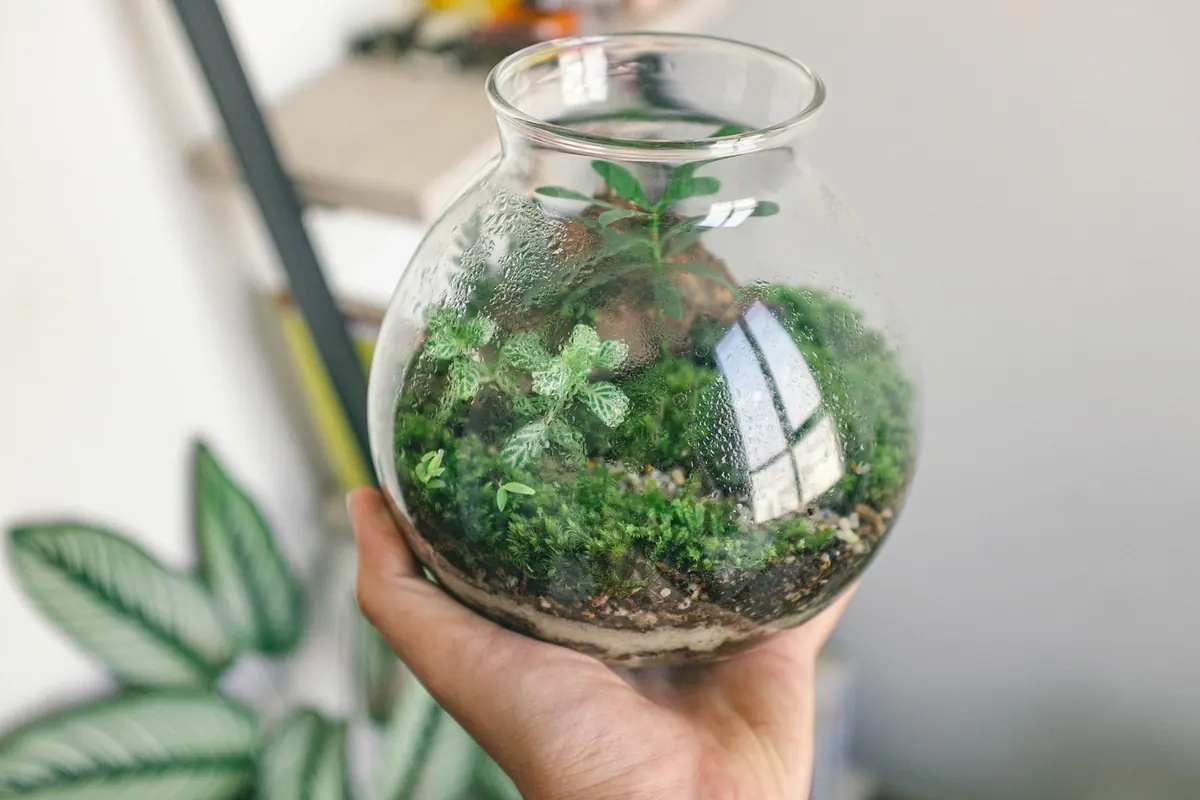
Fix the container first. Drill holes if the pot is drillable, raise it on feet or a couple of pebbles, and empty saucers within an hour of watering. In terrariums and shallow bowls, build a false bottom: a two to three centimetre layer of pebbles, leca or coarse grit, a sheet of mesh or weed fabric over it, then the growing medium. Water that drains through should never touch the substrate. Outdoors, moss on a flat slab or a badly draining path benefits from a slight slope, a scattering of grit underneath, or a rethink about where that patch goes.
Misting mistakes
Misting is the most misunderstood habit in moss keeping. A fine spray raises humidity briefly and makes cushions look revived, but it barely wets the substrate underneath, and in a warm room it evaporates within minutes. Mist daily and you can still end up with moss that is bone dry at the base and perpetually damp on top, which is the worst of both worlds.
Treat misting as humidity management and watering as hydration. In a sealed or semi-sealed terrarium, misting is often all that is needed. In open pots, trays and outdoor patches, water the substrate properly and mist between waterings. A few technique points make the difference:
- Use a fine mist, not a jet. Trigger sprayers sold for cleaning blast the moss; a plant mister or a pressure sprayer on its finest setting is better.
- Hold the bottle 20 to 30 centimetres away and sweep across the surface until the cushions darken and glisten, then stop.
- Mist in the morning where you can, so any surplus dries before evening. Damp moss sitting through a cool night invites mould.
- Skip midday misting in summer. It evaporates before it helps, and leaves hard-water spots if you are not using rainwater.
- Never mist moss that is already saturated. Press a fingertip into the cushion first.
Matching water to the season and the situation
A routine that works in July is wrong in January. Outdoor moss in a British winter is largely dormant and needs almost nothing from you; the rain will see to it. In a dry summer spell, water in the evening so it has the night to soak in, and water thoroughly rather than little and often. Indoors, the enemy is central heating, which drops humidity and dries moss from the top down. Expect to mist more often there, but not to water more heavily.
Position matters as much as season. Moss on a sunny wall dries within hours and needs more attention than the same species on shaded, north-facing stone. Deep shade, though, keeps surfaces wet for longer, so reduce watering there rather than applying one schedule everywhere. Watch the moss, not the calendar.
When the damage is already done
A waterlogged, black-bottomed patch is not always a write-off. Lift what you can, trim the rotten base with scissors, and lay the healthy green tops on a fresh, free-draining surface in a shaded spot. Keep it damp rather than wet and give it a few weeks. Moss regrows from fragments and from the tips still alive, and a patch that looked finished in March can be thick again by autumn. If the whole thing has gone to algae and slime, start again with better drainage instead of fighting it.
A routine that keeps moss happy
Water thoroughly when the surface has dried a little, aim rainwater at the substrate rather than the leaves, mist for humidity rather than hydration, and let air move around the garden. In any container, check that water can leave as easily as it arrives. Do those things and the moss will handle the rest. It is a patient plant, and it responds to restraint far better than to attention.
Photo: Hans Anders / Pexels